
Seamless interior floors. Pet-safe. Easy to clean.
Basements, laundry rooms, mudrooms, finished interior spaces. Moisture-tolerant polyaspartic over diamond-ground concrete. Low-VOC application so you can move back in same week.
Free walkthrough.
We bring samples for the space and confirm moisture/concrete conditions.

Basements and interior spaces are not garages.
An indoor concrete floor isn’t pressure-washed, parked on, or exposed to UV. What it deals with is different – and the system we install for it is tuned to those conditions.
Common interior concerns we address:
- Moisture from below – basement slabs without proper vapor barriers can push moisture up through the slab and undermine the coating. We test and treat moisture before laying anything down.
- Pet traffic and accidents – claws, water bowls, occasional accidents. The seamless surface cleans easier than tile grout or wood seams ever will.
- Comfort underfoot – some homeowners want a warmer-feeling surface vs raw cold concrete. Adding insulation or topcoat texture changes the feel.
- Low odor / low VOC – we use low-VOC systems for interior application so the space is back to normal within 24-48 hours.
- Looks like part of the house – decorative finishes that integrate with interior design instead of reading as "garage stuff brought indoors".
The system underneath is the same polyaspartic chemistry we use everywhere. What changes is the spec – moisture-mitigating primer, decorative finish choices appropriate to interior design, low-VOC topcoat for indoor air quality.
Where it fits in the house.
Finished basements
Family rooms, home theaters, guest suites. Moisture-tolerant polyaspartic with decorative finish – reads as designed flooring, not utility coating.
Mudrooms & entries
The hardest-working floor in the house. Seamless surface handles dirt, water, snow boots in winter. Cleans with a damp mop.
Laundry rooms
Detergent spills, water leaks, hot-cold cycles. Chemical-resistant topcoat shrugs off the abuse. No grout to discolor.
Four steps. Indoor-spec’d.
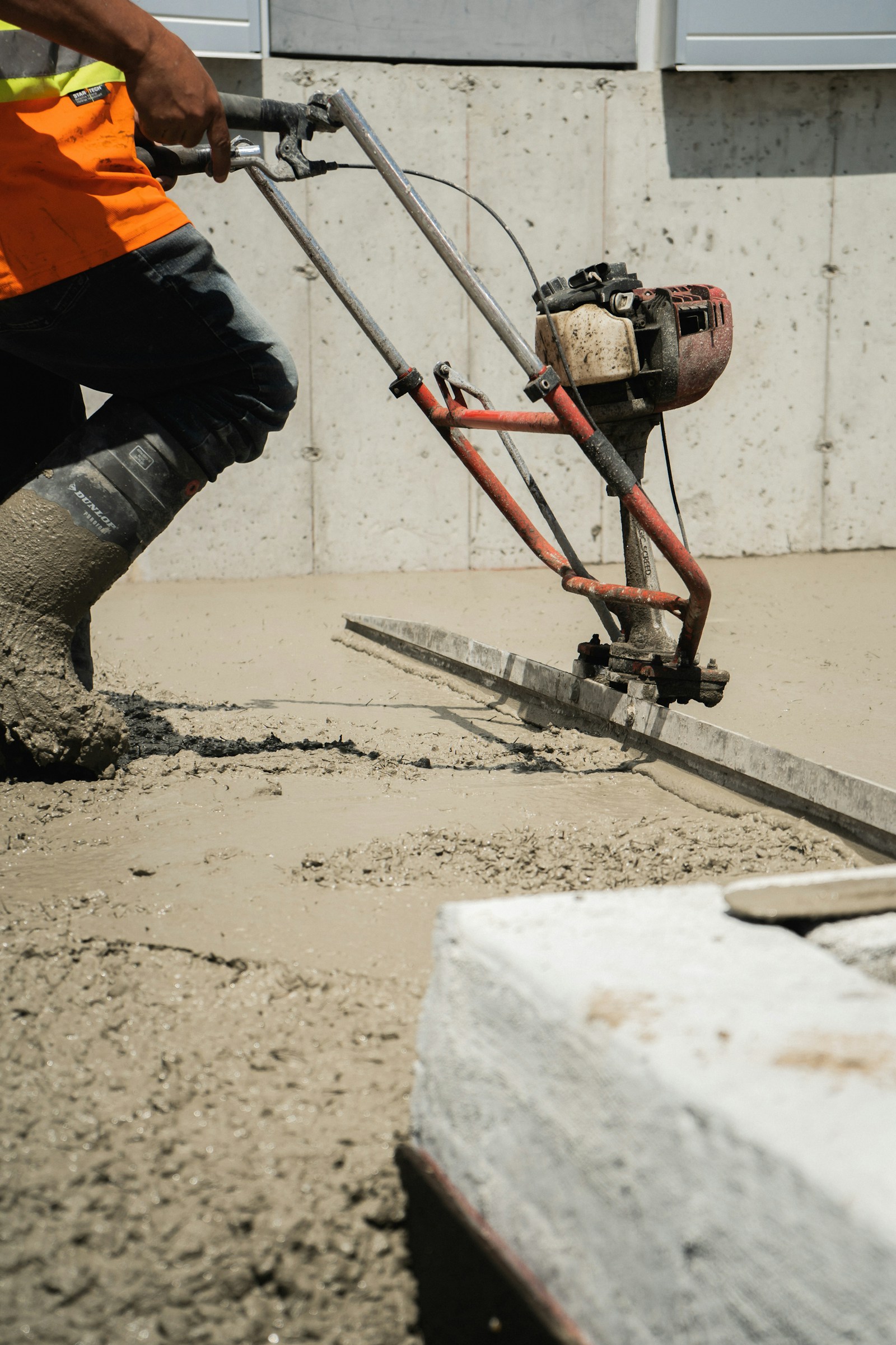
Walkthrough
We test the slab for moisture, assess condition, sample colors in your actual interior lighting.
Fixed quote
One number, in writing, in 24 hours. Includes moisture mitigation if needed, prep, install, warranty.
Diamond-grind prep
Slab ground, cracks repaired, moisture-mitigating primer applied. HEPA vacuum keeps dust contained.
1-day install
Low-VOC polyaspartic system applied. Space ready for furniture in 24-48 hours.
Interior pricing.
Indoor spaces are typically smaller than garages but can require moisture mitigation, which adds to the spec. Pricing reflects total square footage plus slab condition.
Get my fixed quoteThe standard behind every Charleston floor
Diamond-ground prep
Every Charleston slab is mechanically diamond-ground, not acid-etched, so the coating actually bonds and stays down.
Most garages in a day
A standard garage is prepped, coated, and topcoated in one day. Back to parking without a week of downtime.
Bonded and insured
Fully bonded with liability coverage. Ask for the certificate before any crew starts.
The Lodestone Coat Standard
A written commitment on adhesion and finish. If a covered issue shows up, we come back and make it right.
Interior coatings county-wide.
Common interior questions.
Related coatings.
Basement and interior floors for Charleston homes.
The Lowcountry is relentless on concrete. Coastal humidity keeps slabs damp, salt air attacks weak coatings, and many Charleston-area homes sit low against a high water table. Moisture from below is the first thing to solve here — without proper prep and a moisture-tolerant finish, even a good-looking coating blisters in the coastal air. From historic-district properties to newer raised builds, the common thread is humidity, so a slab read and moisture management come before anything decorative.
Interior and basement slabs in Charleston fight hot, humid coastal air, salt exposure, and high moisture and moisture from below. Our seamless, pet-safe coatings seal out moisture, wipe clean with no grout lines, and brighten the Lowcountry basements, laundry rooms, and living spaces.
We install basement interior across Charleston and the Lowcountry — Mount Pleasant, North Charleston, Hanahan, Summerville, Folly Beach, Awendaw, Goose Creek, and James Island — and in neighborhoods like Old Village, I’On, Park West, Hamlin Plantation, Belle Hall, Dunes West, Snee Farm, and Rivertowne. Every Charleston job is prepped and spec’d for hot, humid coastal air, salt exposure, and high moisture, not a recipe copied from another region.
Does Charleston humidity or moisture affect basement floor coatings?
We moisture-test and prep every Charleston basement slab, then use moisture-tolerant systems — essential given hot, humid coastal air, salt exposure, and high moisture — so the floor bonds and won’t blister.
Can you coat a Charleston basement that sometimes gets damp?
Yes — we manage slab moisture during prep, which matters in Charleston, so the seamless finish holds up in basements and interior spaces.
How much does a basement or interior floor coating cost in Charleston?
In Charleston, a basement or interior floor coating typically costs $5 to $12 per square foot installed. The figure covers surface preparation, the coating system itself, and labor. What moves a quote inside that range is slab condition, how much grinding and crack repair the floor needs before anything is applied, the finish you choose, and access to the space.
How we specify a floor in Charleston
The Lowcountry is relentless on concrete. Coastal humidity keeps slabs damp, salt air attacks weak coatings, and many Charleston-area homes sit low against a high water table. Moisture from below is the first thing to solve here — without proper prep and a moisture-tolerant finish, even a good-looking coating blisters in the coastal air. From historic-district properties to newer raised builds, the common thread is humidity, so a slab read and moisture management come before anything decorative.
Every slab is tested before we quote a system. Moisture drives more coating failures than any other single factor, so we measure it rather than guess: a calcium chloride test to ASTM F1869 for moisture vapor emission, or in-slab relative humidity probes to ASTM F2170 where the slab is newer or below grade. If the readings come back high, the floor gets a moisture-mitigating primer before the build coats, not a thicker topcoat.
Preparation is mechanical, never acid etching. Diamond grinding opens the slab to an ICRI CSP-2 to CSP-3 surface profile, which is the texture a coating needs to key into concrete properly. Cracks and joints are chased out and filled before the first coat. Slab flatness and finish are assessed against ACI 302.1R guidance so we can tell you up front what the floor will and will not hide.
Systems are quoted by total mil build, not by coat count, because that is what determines how long a floor lasts. A flake system for a working garage is typically specified in the 20 to 30 mil range; a thin roll-on kit is often 8 to 12 mils, which is why it wears through at the tire tracks first. Polyaspartic topcoats cure fast and hold a wider application window than epoxy, they stay UV-stable rather than ambering in daylight, and their short pot life and recoat window are exactly why they are a crew-and-equipment job rather than a weekend project.
Get your interior floor quoted in 24 hours.
Free walkthrough with moisture test. Low-VOC application. Fixed quote, no surprises.